
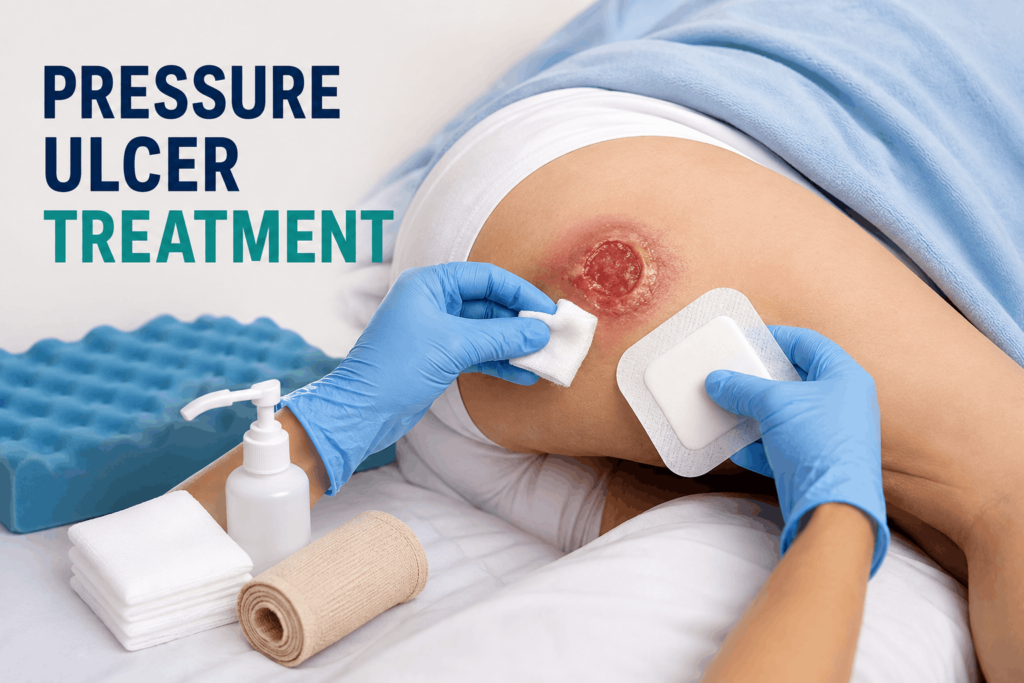
Pressure ulcers, also called bedsores or pressure sores, are wounds that can develop when continuous pressure reduces blood flow to an area of the skin. They are particularly common in people who spend long periods in bed, use wheelchairs, or have difficulty changing their position independently. Without appropriate care, a small area of skin damage can gradually become a deeper wound affecting underlying tissue.
Understanding pressure ulcer treatment is important for patients, caregivers, and family members because early action can help prevent a wound from becoming more serious. Treatment generally focuses on relieving pressure, protecting the wound, maintaining a healthy environment for healing, managing infection when present, and supporting overall health. The appropriate approach depends on the ulcer’s stage, location, size, depth, and the person’s general condition.
What Is a Pressure Ulcer?
A pressure ulcer is an injury to the skin and underlying tissue caused mainly by prolonged pressure, often combined with friction or shearing. Areas where bones are close to the skin are particularly vulnerable, including the heels, ankles, hips, tailbone, elbows, shoulders, and the back of the head. Constant pressure can restrict circulation and prevent tissues from receiving enough oxygen and nutrients.
Pressure ulcers can develop gradually or, in some situations, become noticeable relatively quickly. Early damage may appear as persistent redness or discoloration, warmth, swelling, tenderness, or changes in skin texture. If pressure continues, the affected area may develop an open wound, blister, crater-like injury, or deeper tissue damage.
What Causes Pressure Ulcers?
The main cause of a pressure ulcer is prolonged pressure on a particular part of the body. When someone remains in the same position for an extended period, body weight can compress the small blood vessels supplying the skin and surrounding tissues. Reduced circulation can eventually cause tissue damage.
Other factors can increase the risk. Limited mobility, reduced sensation, poor nutrition, dehydration, moisture from sweating or incontinence, and certain medical conditions may make the skin more vulnerable. Friction can occur when the skin repeatedly rubs against bedding or clothing, while shearing can happen when the skin stays in place but deeper tissues move, such as when a person slides down in bed.
Understanding Pressure Ulcer Stages
Healthcare professionals commonly classify pressure ulcers according to how deeply the tissue has been damaged. Understanding the stage is important because treatment varies depending on the severity of the wound.
Stage 1 Pressure Ulcer
A Stage 1 pressure ulcer involves intact skin but shows signs of pressure-related damage. The affected area may remain persistently discolored and may feel warmer, cooler, firmer, softer, or more painful than surrounding skin. In darker skin tones, the change may not appear as obvious redness, making changes in temperature, texture, and sensation especially important.
At this stage, immediate pressure relief is essential. Regular repositioning, appropriate support surfaces, skin protection, and close monitoring can help prevent the condition from progressing. A healthcare professional should assess any suspected pressure injury, particularly when the skin changes do not improve after pressure is removed.
Stage 2 Pressure Ulcer
A Stage 2 ulcer involves partial-thickness skin loss. It may look like a shallow open wound or blister and can be painful or sensitive. Because the protective skin barrier has been damaged, the area requires careful protection and appropriate wound management.
Treatment generally involves removing pressure from the affected location, keeping the wound appropriately protected, and preventing further trauma. The wound should be assessed by a qualified healthcare professional so that the correct dressing and care plan can be selected.
Stage 3 Pressure Ulcer
A Stage 3 pressure ulcer involves full-thickness skin loss, and fatty tissue may be visible. Depending on the location and condition, the wound may contain drainage, slough, or areas of damaged tissue. The wound can be considerably deeper than it appears on the surface.
Stage 3 ulcers require professional wound assessment and ongoing management. Treatment may involve specialized dressings, removal of unhealthy tissue when clinically appropriate, nutritional support, pressure redistribution, and monitoring for infection or other complications.
Stage 4 Pressure Ulcer
A Stage 4 pressure ulcer is a severe wound involving extensive tissue damage. Muscle, tendon, cartilage, or bone may be exposed or directly affected. These wounds have a higher risk of serious complications and require specialized medical care.
Treatment may involve advanced wound management, pressure redistribution, debridement, infection management when indicated, nutritional optimization, and, in some cases, surgical treatment. The treatment plan should be individualized according to the person’s overall health and the characteristics of the wound.
Pressure Ulcer Treatment: Key Approaches
Effective pressure ulcer treatment is not limited to putting a dressing over the wound. Successful management usually requires a comprehensive approach that addresses the underlying cause as well as the wound itself.
1. Relieve Pressure Immediately
Reducing pressure on the affected area is one of the most important parts of treatment. Patients who have limited mobility may need help changing positions at regular intervals. A healthcare professional or trained caregiver can develop a repositioning schedule based on the person’s condition, mobility, skin condition, and risk level.
Specialized mattresses, cushions, heel protection, and other pressure-redistributing surfaces may also be recommended. These products do not replace repositioning but can help reduce the amount of pressure placed on vulnerable areas.
2. Keep the Wound Properly Protected
Wound care should be based on the ulcer’s characteristics, including its depth, moisture level, drainage, location, and surrounding skin condition. Appropriate dressings can help protect the wound from contamination, maintain a suitable moisture balance, and support the natural healing process.
A dressing should not be selected simply because it is popular or easily available. The most suitable option depends on the individual wound. Healthcare professionals can recommend the appropriate dressing and explain how frequently it should be changed.
3. Clean the Wound Carefully
Proper wound cleaning is an important part of pressure ulcer care. Cleaning helps remove contaminants and prepares the wound for appropriate dressing. However, harsh chemicals, unnecessary antiseptics, or aggressive scrubbing can damage fragile tissue and interfere with healing.
Patients and caregivers should follow the wound-care instructions provided by their healthcare professional. If the wound develops increased drainage, an unpleasant odor, spreading redness, increasing pain, or other concerning changes, medical assessment may be necessary.
4. Remove Damaged Tissue When Necessary
Some pressure ulcers contain dead or unhealthy tissue that can interfere with healing. A healthcare professional may recommend debridement, which means removing nonviable tissue from the wound.
Different approaches may be appropriate depending on the patient’s health, wound characteristics, and clinical circumstances. Debridement should be performed by an appropriately trained professional rather than attempted at home, particularly when the wound is deep or close to important structures.
5. Manage Infection Promptly
Not every pressure ulcer is infected, but infection can become a serious complication. Warning signs can include increasing redness or warmth around the wound, swelling, worsening pain, pus-like drainage, unpleasant odor, delayed healing, or fever. Some people may develop more subtle symptoms, particularly if they have other health problems.
If infection is suspected, professional medical evaluation is important. Antibiotics may be appropriate in certain circumstances, but they are not automatically required for every pressure ulcer. Treatment decisions should be based on clinical assessment rather than self-medication.
6. Improve Nutrition and Hydration
The body requires sufficient energy, protein, vitamins, minerals, and fluids to repair damaged tissue. People with pressure ulcers may therefore need a nutritional assessment, especially when they have poor appetite, difficulty eating, unintended weight loss, or an underlying condition affecting nutrition.
A healthcare professional or registered dietitian may recommend dietary adjustments based on individual needs. Protein-rich foods and adequate fluid intake can be important components of a balanced healing plan, but nutritional supplements should be considered with professional guidance when necessary.
How Long Does a Pressure Ulcer Take to Heal?
There is no single healing timeline for pressure ulcers. A small, early-stage injury may improve relatively quickly after pressure is removed and appropriate care begins. More advanced ulcers can take considerably longer to heal and may require months of treatment.
Healing depends on factors such as the ulcer’s stage and size, circulation, nutrition, mobility, infection, underlying health conditions, age, and the effectiveness of pressure relief. Regular professional assessment is useful because wound appearance alone may not always indicate whether deeper tissue is healing.
Pressure Ulcer Prevention
Prevention is especially important for people who are at high risk of developing pressure injuries. The first step is identifying individuals who have limited mobility, reduced sensation, poor nutritional status, or other risk factors.
Regular repositioning can help reduce prolonged pressure. Skin should be checked routinely, particularly over bony areas. Keeping the skin clean and appropriately moisturized while managing excess moisture can also help protect the skin barrier.
Appropriate mattresses, cushions, positioning techniques, and mobility assistance may further reduce risk. Caregivers should also avoid dragging a person across a bed because this can increase friction and shearing. When possible, movement should be performed using safe techniques and appropriate equipment.
When Should You See a Doctor?
Any suspected pressure ulcer deserves attention, particularly when the skin is broken or the area is getting worse. Professional assessment is especially important for deep wounds, wounds with significant drainage, or ulcers that do not improve after pressure is relieved.
Urgent medical attention may be needed when there are signs of spreading infection, fever, severe or rapidly increasing pain, confusion, significant swelling, foul-smelling drainage, exposed bone, or rapidly worsening tissue damage. Early professional care can help identify complications and establish an appropriate treatment plan.
The Importance of Individualized Wound Care
There is no universal treatment that works for every pressure ulcer. A healthcare professional should consider the person’s mobility, nutrition, circulation, medical history, medications, wound stage, location, and risk of complications before recommending treatment.
Patients and caregivers should also keep track of changes in the wound and follow the recommended repositioning and wound-care routine. Consistency is important because pressure relief and wound protection need to continue throughout the healing process, not only when the ulcer appears painful.
How Mel Health Tech Can Support Health-Focused Awareness
Mel Health Tech recognizes the importance of providing clear and accessible information that helps people understand topics relevant to everyday wellbeing and responsible care. Educational content about conditions such as pressure ulcers can help patients, families, and caregivers recognize potential warning signs and understand why professional evaluation matters.
However, online information should complement—not replace—individual medical advice. Anyone with a suspected or existing pressure ulcer should consult an appropriately qualified healthcare professional for diagnosis, staging, treatment, and follow-up care tailored to their circumstances.
Final Thoughts
Pressure ulcer treatment requires more than treating the visible wound. Effective care involves relieving pressure, protecting the skin, selecting appropriate wound care, addressing infection when necessary, supporting nutrition and hydration, and monitoring the healing process. Early recognition is particularly valuable because prompt intervention may help prevent a minor pressure injury from becoming a deeper wound.
For people at risk, prevention should remain a central part of care. Regular repositioning, skin checks, proper nutrition, moisture management, safe movement, and appropriate pressure-redistributing equipment can all contribute to reducing risk. When a pressure ulcer develops, professional assessment should guide treatment, especially for moderate or severe wounds.
FAQs About Pressure Ulcer Treatment
1. What is the best treatment for a pressure ulcer?
The best treatment depends on the ulcer’s stage, size, location, depth, and the person’s overall health. Pressure relief is fundamental, while wound protection, appropriate dressings, nutrition, infection management, and debridement may also be required. A healthcare professional should assess the wound and create an individualized treatment plan.
2. Can a pressure ulcer heal on its own?
Some very early pressure-related skin changes may improve when pressure is promptly removed and appropriate preventive care is provided. However, an open or worsening wound should not be ignored. Professional assessment is important because pressure ulcers can become deeper and more complicated without appropriate treatment.
3. How can pressure ulcers be prevented?
Prevention involves reducing prolonged pressure, changing positions regularly, checking vulnerable areas of skin, maintaining good nutrition and hydration, managing moisture, and using suitable pressure-redistributing surfaces when recommended. People with limited mobility may need assistance from trained caregivers.
4. Are pressure ulcers painful?
Pressure ulcers can be painful, although the amount of pain varies. People with reduced sensation may not experience significant pain even when tissue damage is serious. Changes in skin color, temperature, texture, drainage, or wound appearance should therefore be taken seriously even when there is little or no pain.
5. When does a pressure ulcer require medical attention?
Medical assessment is recommended for any open pressure ulcer, a wound that is worsening, or skin damage that does not improve after pressure is removed. Urgent evaluation may be necessary if there is fever, spreading redness, increasing pain, swelling, foul-smelling drainage, exposed bone, or other signs of a serious infection or complication.