
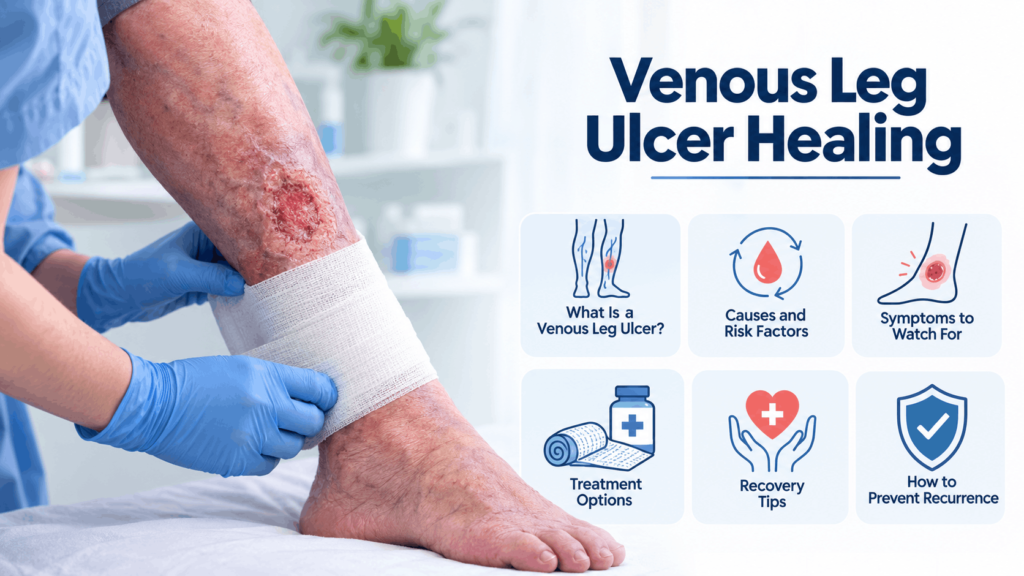
Venous leg ulcers are long-lasting wounds that commonly develop on the lower leg when blood does not flow properly back toward the heart. Because poor circulation can slow the delivery of oxygen and nutrients needed for tissue repair, these wounds may take considerable time to heal without appropriate care. Understanding the causes, symptoms, treatment options, and prevention strategies can help people seek timely medical attention and support better recovery.
Venous leg ulcer healing usually requires more than treating the wound itself. Effective care often focuses on improving circulation, managing swelling, protecting the wound from infection, and addressing the underlying venous problem. With professional assessment and a consistent treatment plan, many people can achieve healing and reduce the risk of the ulcer returning.
What Is a Venous Leg Ulcer?
A venous leg ulcer is an open wound that develops when the veins in the leg are unable to move blood efficiently back toward the heart. This condition is commonly associated with chronic venous insufficiency, where increased pressure inside the leg veins affects the surrounding tissues. Over time, the skin can become weaker and more vulnerable to injury, eventually resulting in an ulcer.
These ulcers most often appear around the lower part of the leg, particularly near the ankle. The wound may have an irregular shape and can produce fluid or have surrounding skin that appears swollen, dry, discoloured, or irritated. Because the underlying circulation problem can continue even after the wound improves, proper medical evaluation is an important part of successful venous leg ulcer healing.
What Causes Venous Leg Ulcers?
The primary cause is usually poor functioning of the veins in the legs. Healthy leg veins use valves and muscle movement to help push blood upward toward the heart. When these valves become damaged or do not work effectively, blood can collect in the lower legs, increasing venous pressure and affecting the health of the skin and underlying tissues.
Several factors can increase the likelihood of developing a venous leg ulcer. Previous blood clots, varicose veins, limited mobility, obesity, ageing, leg injuries, and prolonged periods of standing or sitting may contribute to venous circulation problems. People with a history of leg swelling or chronic venous disease may also have a greater risk of developing persistent wounds.
Recognising the Symptoms
Identifying a venous leg ulcer early can encourage timely assessment and treatment. The wound may initially appear as a small area of broken skin that gradually becomes larger or fails to heal. The surrounding area can feel itchy, tight, painful, or swollen, particularly after standing for long periods.
Other possible signs include changes in skin colour, thickened or hardened skin, dry or flaky areas, and fluid leaking from the wound. Some people may experience discomfort that becomes worse toward the end of the day and improves when the leg is elevated. However, symptoms can vary, so a healthcare professional should assess any persistent or unexplained leg wound.
Why Is Venous Leg Ulcer Healing Sometimes Slow?
One of the biggest challenges in venous leg ulcer healing is the underlying circulation problem. If blood continues to pool in the lower leg, increased pressure can interfere with normal tissue repair. Swelling can further stretch the skin and make the wound environment less suitable for healing.
Other factors can also influence recovery. Infection, poor nutrition, smoking, limited movement, certain medical conditions, and repeated trauma to the wound may delay healing. The size and duration of the ulcer can also affect recovery time. For these reasons, treatment should be tailored to the individual’s condition rather than relying on a single approach.
How Are Venous Leg Ulcers Diagnosed?
A healthcare professional will usually examine the wound, surrounding skin, swelling, and circulation in the affected leg. A medical history can help identify factors such as previous blood clots, varicose veins, reduced mobility, or earlier ulcers. The healthcare professional may also assess whether another type of leg ulcer could be responsible for the wound.
Circulation testing may be recommended before certain treatments, particularly compression therapy. This is important because not every leg ulcer is caused by venous disease, and compression is not appropriate for everyone. A proper diagnosis helps ensure that treatment addresses the actual cause of the wound and reduces the possibility of complications.
Treatment Options for Venous Leg Ulcer Healing
1. Compression Therapy
Compression is commonly an important part of treatment for venous leg ulcers when it is medically appropriate. Compression garments or bandaging apply controlled pressure to the leg, helping reduce swelling and supporting the movement of blood back toward the heart.
Because the level and type of compression should depend on the person’s circulation and overall health, it should be selected and applied according to professional advice. Using compression incorrectly can cause problems, so patients should follow their healthcare provider’s instructions carefully.
2. Professional Wound Care
Keeping the ulcer appropriately clean and protected is another important part of recovery. A healthcare professional may recommend specific dressings based on the amount of fluid, wound condition, and surrounding skin. Dressings can help maintain a suitable wound environment while protecting the area from further irritation.
Wound care may change as the ulcer improves. A wound that produces significant fluid may require different management from a smaller, drier ulcer. Regular monitoring allows healthcare professionals to identify changes and adjust the treatment plan when necessary.
3. Managing Leg Swelling
Swelling can make it harder for a venous ulcer to heal, making swelling management an important part of treatment. Elevating the affected leg when resting can help reduce fluid accumulation. In some cases, compression and appropriate movement may also support better circulation.
People should follow individual medical advice because the safest approach depends on their circulation, mobility, and underlying conditions. Sudden or severe swelling, especially when accompanied by significant pain or other concerning symptoms, should receive prompt medical attention.
4. Staying Physically Active
Appropriate movement can support the natural muscle pump in the lower legs. Walking and simple ankle movements may encourage blood to move upward through the veins. For someone who spends much of the day sitting or standing, taking suitable movement breaks can be helpful.
However, exercise should be appropriate for the person’s health and wound condition. Someone with significant pain, mobility limitations, or another medical problem should seek professional guidance before starting a new exercise routine.
5. Maintaining Good Nutrition
The body needs adequate nutrients to repair damaged tissue. A balanced diet containing sufficient protein, vitamins, minerals, healthy fats, and fluids can support general wound healing. People who have poor appetite or dietary restrictions may benefit from discussing their nutritional needs with a healthcare professional or qualified dietitian.
Nutrition alone cannot correct the circulation problem responsible for a venous ulcer, but poor nutritional status can make recovery more difficult. Maintaining a healthy, balanced diet is therefore best considered as one component of a broader wound-care plan.
The Role of Technology in Wound Care
Technology is increasingly supporting healthcare professionals in monitoring and managing chronic wounds. Digital tools can help with documentation, wound assessment, progress tracking, and communication between patients and care teams. These approaches may make it easier to identify changes over time and maintain more consistent records.
Mel Health Tech is relevant to this evolving healthcare environment, where technology can support more organised and informed approaches to health and wound management. Digital solutions should complement, rather than replace, professional clinical assessment, particularly when a wound is persistent, worsening, or showing signs of infection.
How Long Does Venous Leg Ulcer Healing Take?
The healing period varies significantly from person to person. A small ulcer may improve relatively quickly with appropriate treatment, while a larger or long-standing wound can take much longer. The effectiveness of treatment, severity of venous disease, wound size, infection, swelling, nutrition, mobility, and other health factors can all influence recovery.
It is important not to judge healing based solely on the appearance of the wound from one day to another. Consistent improvement over time is more meaningful. Regular follow-up appointments can help healthcare professionals monitor the wound and modify treatment when necessary.
How to Support Faster and Safer Healing
Following the recommended treatment plan consistently is one of the most important steps a patient can take. Dressings should be changed as instructed, prescribed compression should be used correctly, and the wound should be protected from unnecessary friction or injury. Patients should also avoid making major changes to wound treatment without professional advice.
Managing factors that affect circulation can also support long-term health. Maintaining a healthy weight where appropriate, staying physically active, avoiding smoking, managing existing health conditions, and following medical recommendations may all contribute to better outcomes. Most importantly, patients should attend follow-up appointments even when the ulcer appears to be improving.
Preventing Venous Leg Ulcers From Returning
Healing the current ulcer is only one part of long-term management. Venous leg ulcers can return when the underlying circulation problem remains untreated or poorly controlled. Once the wound has healed, patients may need to continue preventive measures recommended by their healthcare professional.
Regular movement, appropriate compression when advised, leg elevation, skin moisturising, and protecting the legs from injury can help support healthy skin and circulation. People who have previously experienced a venous ulcer should pay attention to early changes such as swelling, redness, skin breakdown, or unusual discomfort and seek medical advice promptly.
When Should You Seek Medical Help?
A leg wound that does not begin to heal should be professionally assessed rather than managed indefinitely at home. Medical attention is particularly important if the wound becomes increasingly painful, swollen, red, warm, or produces unusual discharge. Fever or feeling generally unwell may also indicate a potentially serious infection.
Immediate assessment may be necessary when there is sudden severe leg swelling or pain, significant bleeding, or rapidly worsening symptoms. Early professional intervention can help identify complications and ensure that treatment is appropriate for the underlying cause.
Conclusion
venous leg ulcer healing is a gradual process that requires attention to both the wound and the circulation problem behind it. Appropriate assessment, compression when medically suitable, professional wound care, swelling management, healthy movement, good nutrition, and consistent follow-up can all contribute to better recovery.
Understanding how venous ulcers develop can also help people take preventive action after healing. Because every wound is different, treatment should be based on professional assessment rather than a one-size-fits-all approach. With timely care and a well-managed treatment plan, healing is possible, while ongoing preventive measures can help support healthier legs and reduce the risk of recurrence.
Frequently Asked Questions
1. What is the fastest way to heal a venous leg ulcer?
There is no single treatment that guarantees the fastest healing for every person. Effective care generally involves addressing the underlying venous circulation problem, managing swelling, providing appropriate wound care, and following professional recommendations. Compression therapy may be an important part of treatment when circulation has been assessed and compression is considered safe.
2. Can a venous leg ulcer heal completely?
Yes, many venous leg ulcers can heal with appropriate treatment and consistent care. However, healing time depends on factors such as ulcer size, duration, circulation, infection, swelling, mobility, and overall health. Even after the wound closes, preventive care may be necessary because the underlying venous condition can remain.
3. Can I treat a venous leg ulcer at home?
Basic wound protection and following an established care plan may be possible at home, but a persistent leg ulcer should be assessed by a healthcare professional. The correct treatment depends on the cause of the ulcer and the condition of the leg’s circulation. Self-treating with unverified remedies or inappropriate compression may delay healing or cause complications.
4. Does walking help venous leg ulcer healing?
Appropriate walking can support circulation by activating the calf muscles, which help move blood through the veins. However, the amount of walking that is suitable depends on the individual’s health, mobility, pain level, and wound condition. A healthcare professional can provide guidance on safe physical activity.
5. Why do venous leg ulcers keep coming back?
Recurrence can happen because the underlying venous circulation problem may continue even after the original wound heals. Persistent swelling, inadequate preventive care, reduced mobility, skin damage, and other risk factors can also contribute. Following a long-term prevention plan can help reduce the likelihood of recurrence.
6. When should a venous leg ulcer be considered serious?
Any persistent leg ulcer deserves appropriate medical evaluation. Increasing pain, spreading redness, warmth, swelling, unpleasant discharge, fever, or rapid changes in the wound may indicate infection or another complication. Prompt medical assessment is especially important when symptoms are worsening rather than improving.