
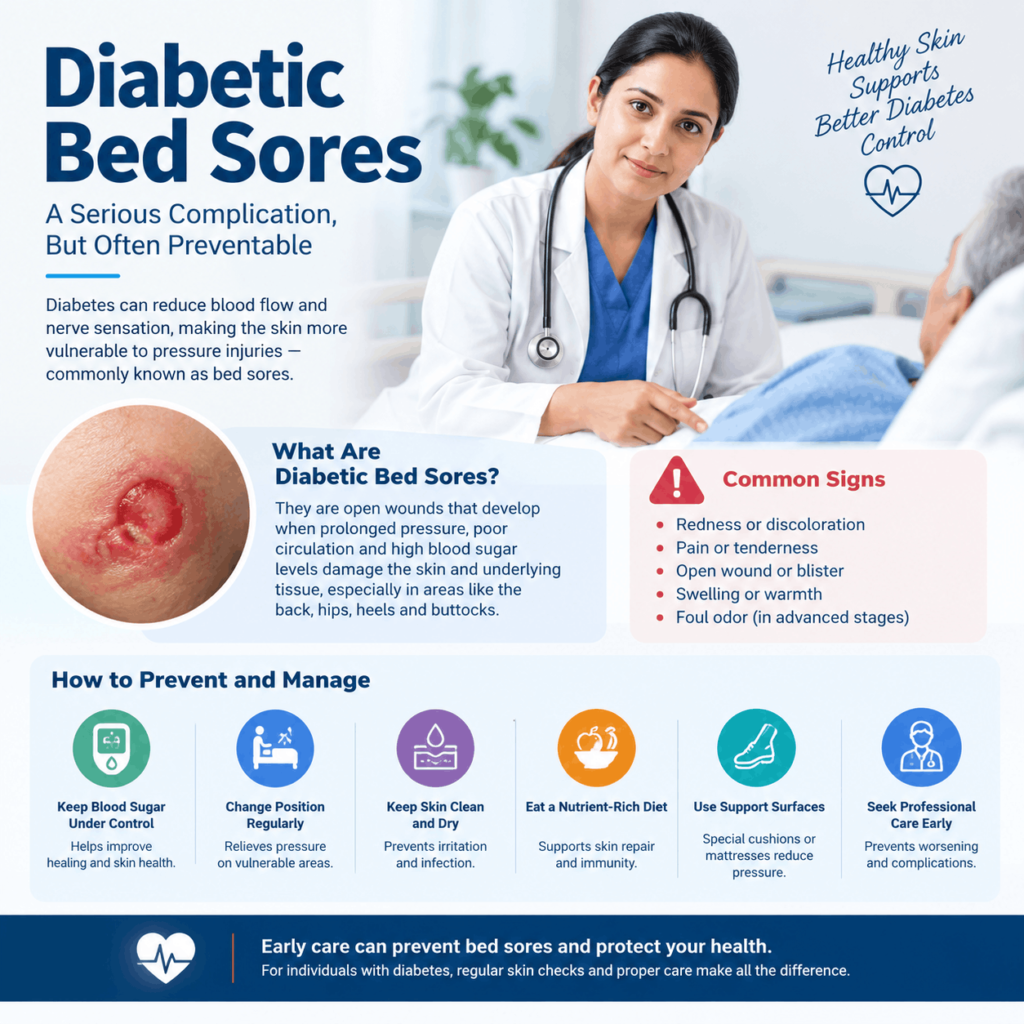
Living with diabetes changes how your body heals, and one of the most overlooked complications is skin breakdown from prolonged pressure. Diabetic bed sores, also known as diabetic pressure ulcers, develop faster and heal slower in people with diabetes because of poor circulation, nerve damage, and reduced immune response. Understanding how to treat and manage diabetic bed sores early can mean the difference between a minor wound and a serious infection.
This guide walks through what causes diabetic bed sores, how they progress, the most effective treatment approaches, and when it’s time to bring in a medical professional.
What Are Diabetic Bed Sores
Diabetic bed sores are areas of damaged skin and tissue that form when sustained pressure cuts off blood flow to that area, usually over bony parts of the body like the heels, hips, tailbone, ankles, and shoulder blades. In people without diabetes, the body typically senses discomfort and shifts position before real damage occurs. In diabetic patients, nerve damage (diabetic neuropathy) often dulls that warning signal, so pressure can build unnoticed for hours.
Combined with slower wound healing and reduced blood flow, this is why diabetic bed sores are more common, more severe, and more prone to infection than standard pressure sores.
Why Diabetes Makes Bed Sores Worse
A few factors specific to diabetes make bed sore management more complicated:
- Poor circulation. High blood sugar damages small blood vessels over time, limiting oxygen and nutrients reaching the skin.
- Neuropathy. Reduced sensation means pain or pressure often goes unnoticed until the sore is already advancing.
- Slower healing. Elevated blood glucose interferes with the body’s natural wound repair process.
- Weaker immune response. Diabetic patients are more vulnerable to skin infections, which can spread quickly if a sore isn’t treated promptly.
This combination is why diabetic bed sores need a more proactive treatment approach than standard pressure sores.
Stages of Diabetic Bed Sores
Bed sores are generally classified into four stages, and knowing the stage helps determine the right treatment path.
Stage 1
Skin is intact but appears red and does not turn white (blanch) when pressed. The area may feel warm, firm, or tender.
Stage 2
Partial skin loss occurs, presenting as a shallow open wound or blister. This stage is often painful and prone to infection if not cleaned properly.
Stage 3
Full-thickness skin loss extends into the fat layer beneath the skin. The wound may look like a crater and can have a foul odor if infected.
Stage 4
The most severe stage, with damage reaching muscle, tendon, or even bone. These wounds carry a high risk of sepsis and typically require specialized medical treatment.
Catching a diabetic bed sore at Stage 1 or 2 dramatically improves the odds of full recovery without complications.
Diabetic Bed Sore Treatment Options
1. Relieve the Pressure First
The single most important step is removing pressure from the affected area. This may mean repositioning every two hours for bedridden patients, using pressure-relieving cushions or mattresses, and avoiding prolonged sitting or lying on the same spot.
2. Clean and Dress the Wound Properly
For open sores, gentle cleaning with saline solution (not harsh antiseptics, which can damage healthy tissue) followed by an appropriate wound dressing helps maintain a moist healing environment. The right dressing depends on the stage and depth of the wound, so a wound care professional should guide dressing selection for anything beyond Stage 1.
3. Manage Blood Sugar Levels
Since elevated glucose directly slows healing, keeping blood sugar within target range is a core part of treating diabetic bed sores, not a separate concern. Work with a physician to adjust medication, diet, or insulin as needed during the healing period.
4. Address Nutrition
Protein, vitamin C, zinc, and adequate hydration all support tissue repair. Malnutrition is one of the most common reasons bed sores fail to heal, particularly in elderly diabetic patients.
5. Monitor for Infection
Watch for increased redness, swelling, warmth, foul odor, or discharge. Fever or confusion in an elderly patient can also signal a spreading infection. Diabetic patients should never wait to see if a sore “clears up on its own,” since infections can progress to cellulitis or sepsis quickly.
6. Advanced Medical Treatments
For Stage 3 and 4 wounds, treatment often requires debridement (removal of dead tissue), specialized wound dressings, negative pressure wound therapy, or in some cases surgical intervention. These treatments should only be performed by a qualified wound care provider.
Preventing Diabetic Bed Sores
Prevention is far easier and safer than treatment, especially for diabetic patients who are bedridden, wheelchair-bound, or have limited mobility. Key prevention steps include:
- Daily skin inspections, especially over bony areas
- A structured repositioning schedule (every 2 hours in bed, every 15-30 minutes in a wheelchair)
- Pressure-relieving mattresses or cushions
- Keeping skin clean and dry, particularly for patients with incontinence
- Managing blood sugar consistently
- Wearing properly fitted diabetic footwear to reduce foot pressure points
At Mel Health Tech, we work with caregivers, families, and diabetic patients to build practical daily care routines that catch pressure sores before they become serious, because early detection remains the most effective form of treatment. You can learn more about diabetic skin and wound care support at melhealthtech.com.
When to See a Doctor
Contact a healthcare provider immediately if:
- The sore shows signs of infection (odor, discharge, warmth, spreading redness)
- The wound has not improved within a few days of home care
- The patient develops a fever
- The sore is Stage 3 or deeper
- Blood sugar levels are difficult to control during the healing process
Diabetic wounds should never be managed with a “wait and see” approach. Early professional evaluation significantly reduces the risk of hospitalization, amputation, or systemic infection.
FAQ
Q: How long do diabetic bed sores take to heal?
A: It depends on the stage. Stage 1 sores can improve within a few days with proper pressure relief, while Stage 3 or 4 wounds may take several weeks to months to heal, often requiring professional wound care throughout.
Q: Can diabetic bed sores be treated at home?
A: Early-stage sores (Stage 1 and mild Stage 2) can often be managed at home with pressure relief, proper cleaning, and blood sugar control. Anything deeper or showing signs of infection needs professional medical care.
Q: What is the biggest risk factor for diabetic bed sores?
A: Reduced sensation from diabetic neuropathy combined with poor circulation is the biggest risk factor, since patients often don’t feel the pressure building before damage occurs.
Q: Are diabetic bed sores more dangerous than regular bed sores?
A: Yes. Because diabetes slows wound healing and weakens the immune response, diabetic bed sores are more likely to become infected and progress to serious complications if not treated early.
Q: What foods help diabetic bed sores heal faster?
A: Protein-rich foods, foods high in vitamin C and zinc, and adequate hydration all support tissue repair. A dietitian can help build a wound-healing meal plan tailored to a diabetic patient’s needs.
Conclusion
Diabetic bed sores are a manageable but serious complication that requires early attention, consistent pressure relief, and close blood sugar control. Catching a sore at Stage 1 and acting immediately gives the best chance of full recovery without hospitalization or long-term damage. If you or a loved one is caring for a diabetic patient at risk of pressure sores, building a proactive daily routine, along with guidance from a qualified wound care provider, is the most reliable way to prevent complications before they start.