
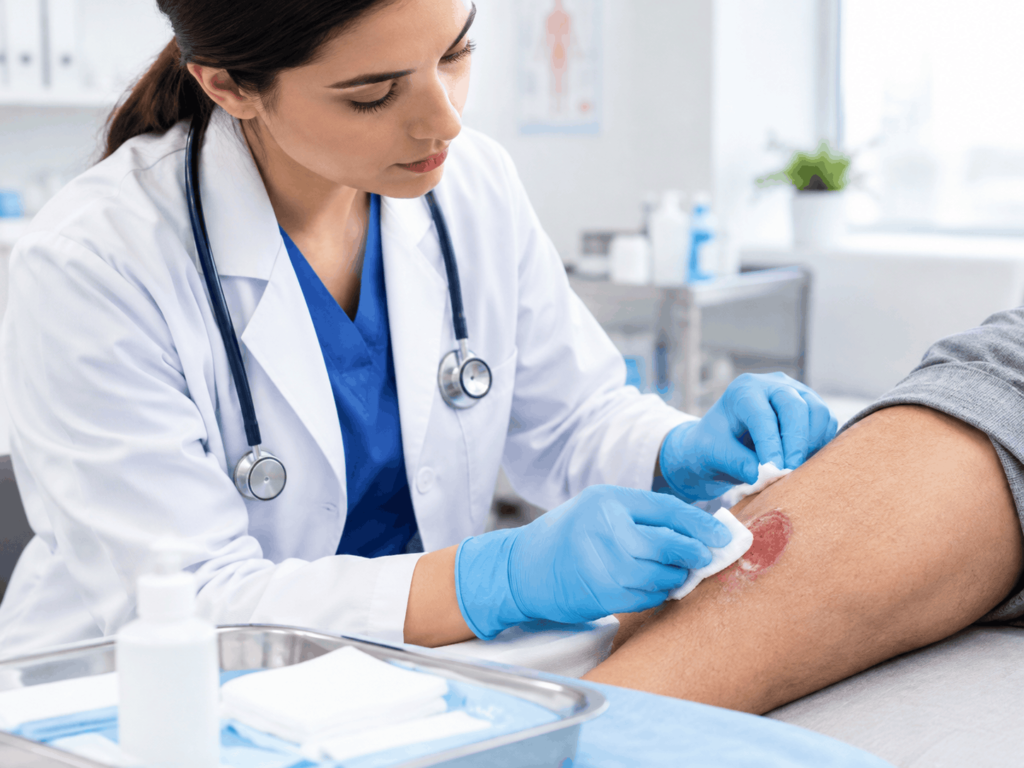
A wound that will not heal can be frightening, especially when you are living on a fixed income in Minnesota and wondering who pays for treatment. The good news is that Medicare covers many advanced wound care services when they are medically necessary. The details, however, depend on the type of wound, the treatment, and the plan you have.
At Mel Health Tech, we follow how wound healing technology is changing patient care, and we believe seniors and their families deserve clear answers about coverage. This guide explains what Medicare typically covers, what you may still owe, and how to prepare for your appointments. It is educational and does not replace advice from your doctor or from Medicare directly.
What Counts as Advanced Wound Care?
Most minor cuts and scrapes heal on their own. A wound is generally considered chronic when it has not shown clear progress after about four weeks. Common examples among older adults include:
- Diabetic foot ulcers
- Pressure ulcers (bedsores)
- Venous leg ulcers caused by poor circulation
- Slow-healing surgical wounds
- Wounds complicated by infection or poor blood flow
Advanced wound care goes beyond basic bandages. It can include specialist evaluation, debridement (removal of damaged tissue), compression therapy, negative pressure wound therapy, hyperbaric oxygen therapy, and skin substitutes. Together, these tools are often described as modern wound healing technology.
Which Parts of Medicare Cover Wound Care?
Medicare Part B (Medical Insurance)
Part B is the part most seniors rely on for wound care. It generally covers outpatient services that are medically necessary, such as:
- Visits with doctors and wound care specialists
- Wound debridement and related procedures
- Surgical dressings when used for a medically necessary treatment
- Durable medical equipment, including negative pressure wound therapy pumps for qualifying wounds
- Hyperbaric oxygen therapy for specific approved conditions
After you meet the yearly Part B deductible, you typically pay 20 percent of the Medicare-approved amount, and Medicare pays 80 percent. There is no yearly out-of-pocket limit in Original Medicare, which is why supplemental coverage matters.
Medicare Part A (Hospital Insurance)
Part A applies if you are admitted to the hospital or a skilled nursing facility. If a wound requires inpatient care, for example for a serious infection or surgery, Part A helps cover the stay under its own deductible and benefit period rules.
Medicare Advantage (Part C)
Medicare Advantage plans must cover everything Original Medicare covers, but they may use provider networks, prior authorization, and different copayments. Before starting a wound care program, confirm that your specialist and wound care center are in your plan’s network.
Medigap and Minnesota Senior Health Options
A Medigap (Medicare Supplement) policy can help pay the 20 percent coinsurance. Minnesota also offers programs such as Minnesota Senior Health Options (MSHO) for eligible seniors who qualify for both Medicare and Medical Assistance, which may reduce or eliminate many out-of-pocket costs.
Wound Healing Technology Medicare May Cover
Negative Pressure Wound Therapy (Wound Vac)
Negative pressure wound therapy uses a sealed dressing and a small pump to draw fluid away from a wound and encourage healing. Medicare may cover the pump and supplies when your doctor documents that the wound meets coverage criteria, such as certain chronic ulcers or complex surgical wounds that have not responded to standard care.
Hyperbaric Oxygen Therapy (HBOT)
HBOT involves breathing pure oxygen in a pressurized chamber. Medicare covers it only for specific conditions. For diabetic wounds, coverage generally requires a deeper, more serious wound that has not improved after a trial of standard care. HBOT is not covered for every slow-healing wound.
Skin Substitutes and Cellular Products
Bioengineered skin substitutes can help some hard-to-heal wounds, particularly diabetic foot and venous leg ulcers. Coverage rules for these products have been changing, and they often depend on your regional Medicare contractor, the specific product, and documentation that you have tried conventional treatment first. Ask your provider to check current coverage before treatment begins.
Compression Therapy and Specialized Dressings
Compression systems and certain surgical dressings may be covered when they are part of a prescribed treatment plan for conditions such as venous ulcers. Routine over-the-counter bandages you choose yourself are usually not covered.
What You May Still Pay Out of Pocket
Even when a treatment is covered, seniors should plan for possible costs:
- The Part B deductible
- The 20 percent coinsurance on approved services
- Costs for services that Medicare considers not medically necessary
- Products or treatments used outside coverage guidelines
- Copayments or network restrictions under a Medicare Advantage plan
If a provider believes Medicare may deny a service, you may be asked to sign an Advance Beneficiary Notice of Noncoverage (ABN). Read it carefully and ask questions before signing.
How to Make Sure Your Wound Care Is Covered
- Ask your primary care doctor for a referral to a wound care specialist if a wound has not improved in four weeks.
- Confirm that your provider accepts Medicare assignment.
- Ask the clinic to verify coverage and any prior authorization requirements before treatment.
- Keep records of wound size, photos, treatments tried, and how long the wound has been present. Good documentation supports medical necessity.
- Check your Medicare Advantage network if you have a Part C plan.
- Call a free counselor. The Senior LinkAge Line at 1-800-333-2433 is Minnesota’s State Health Insurance Assistance Program, and 1-800-MEDICARE (1-800-633-4227) can answer official coverage questions.
When to Seek Care Right Away
Contact your doctor promptly, or seek urgent care, if a wound shows spreading redness, warmth, swelling, pus, a foul odor, fever, or increasing pain. For people with diabetes or poor circulation, even a small sore on the foot deserves quick attention.
Why Early Treatment Matters
Chronic wounds that go untreated can lead to infection, hospitalization, or in severe cases amputation. Early evaluation also tends to cost less than treating advanced complications. Modern wound healing technology works best when it is paired with good nutrition, blood sugar control, pressure relief, and consistent follow-up with a care team.
Frequently Asked Questions
Q: Does Medicare cover wound care for seniors in Minnesota?
A: Yes. Medicare covers medically necessary wound care in every state, including Minnesota. Part B generally covers outpatient treatment, while Part A applies to hospital and skilled nursing stays.
Q: Will Medicare pay for a wound vac at home?
A: Medicare may cover negative pressure wound therapy as durable medical equipment when your wound meets specific criteria and your doctor documents the need. You will usually pay 20 percent after your deductible unless you have supplemental coverage.
Q: Is hyperbaric oxygen therapy covered for any non-healing wound?
A: No. Medicare covers hyperbaric oxygen therapy only for certain approved conditions, such as qualifying diabetic wounds that have not improved with standard care. Your doctor can tell you whether your situation fits.
Q: Does Medicare cover skin substitutes?
A: Sometimes. Coverage depends on the product, the type of wound, your regional Medicare contractor, and documentation of prior treatment. Because the rules are evolving, ask your provider to verify coverage before treatment.
Conclusion
Medicare can help pay for a wide range of advanced wound care, from specialist visits and debridement to wound vacs and, in some cases, hyperbaric oxygen therapy. The key is understanding your specific plan, documenting your wound’s history, and confirming coverage before treatment starts. Seniors who act early often have better outcomes and fewer surprises with costs.
At Mel Health Tech, our goal is to make wound healing technology easier to understand for patients, families, and caregivers. To learn more, visit Mel Health Tech.