
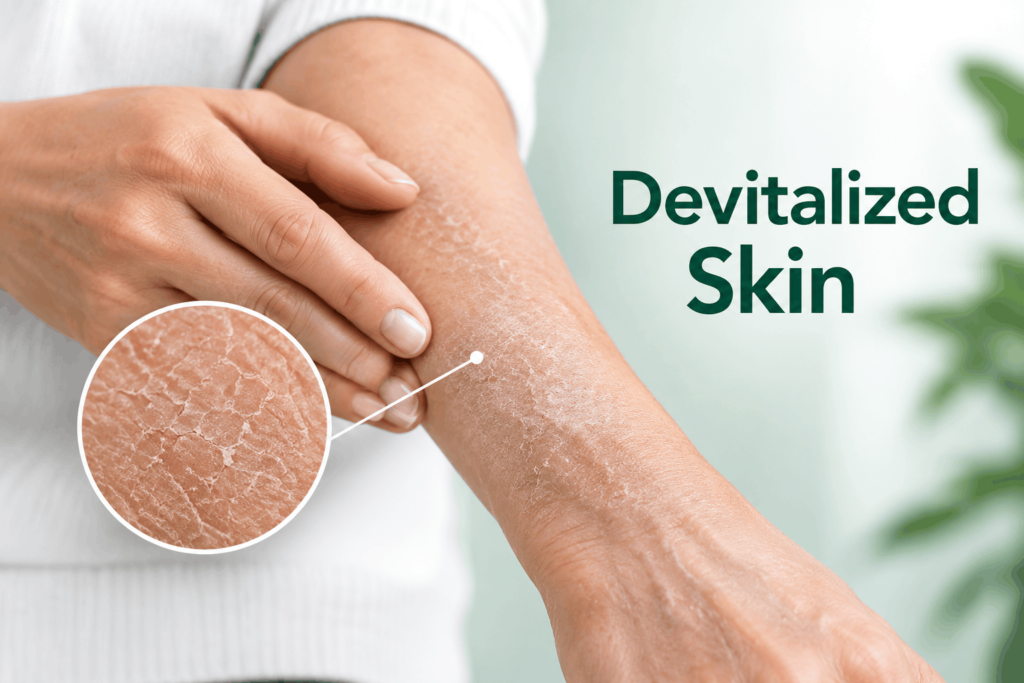
Few things worry people more than seeing dark, leathery, or stringy tissue on a wound that is not getting better. Clinicians call this devitalized skin, and understanding it can make the difference between a wound that heals and one that stays open for months. At Mel Health Tech, we believe clear, accurate wound care education helps patients and caregivers ask better questions and get help sooner. This guide explains what devitalized skin is, why it forms, how it is treated, and when to seek professional care.
What Is Devitalized Skin?
Devitalized skin is skin and underlying tissue that has lost its blood supply and can no longer function or heal. In clinical settings it is often grouped under the broader term “devitalized tissue,” meaning non-viable tissue in a wound bed. Because it has no living blood supply, the body cannot repair it.
Devitalized skin is not just a cosmetic problem. According to wound care literature, devitalized tissue acts as a physical barrier that prevents new skin cells from covering the wound, and it also gives bacteria a ready source of nutrients. This is why removing it is considered a core part of treating hard-to-heal wounds.
What Does Devitalized Skin Look Like?
Devitalized skin can appear in several forms, and the appearance often depends on the wound and how long it has been present:
- Eschar: A dry, thick, black or dark brown scab-like covering that can feel leathery.
- Slough: A moist, yellow, tan, green, or white layer that may look stringy or gelatinous and is often stuck to the wound surface.
- Grey or pale skin: Skin around a wound that looks lifeless, dull, or has no normal color.
- Odor or drainage: Dead tissue often comes with a noticeable smell and increased fluid from the wound.
Only a trained clinician can confirm what type of tissue is present, so avoid guessing or trying to remove it yourself.
Why Does Devitalized Skin Form?
Skin dies when it is cut off from oxygen and nutrients. Several conditions and situations can lead to this:
- Poor circulation: Peripheral artery disease and other vascular problems reduce blood flow to the skin, especially in the legs and feet.
- Diabetes: High blood sugar can damage blood vessels and nerves and weaken the immune response, which raises the risk of non-healing foot ulcers with dead tissue.
- Pressure injuries: Prolonged pressure on the skin, common in people who are bedbound or use a wheelchair, can cut off blood supply and cause tissue death.
- Burns and trauma: Deep burns and crush injuries can destroy skin and tissue directly.
- Infection: Severe infections, including necrotizing infections, can kill tissue quickly and need urgent care.
- Radiation injury and surgical complications: Skin that has been treated with radiation or a surgical flap or graft with poor blood supply may not survive.
Why Is Devitalized Skin a Problem?
Leaving devitalized skin in place can cause several issues:
- Delayed healing: Dead tissue blocks the formation of healthy new tissue.
- Higher infection risk: Bacteria thrive on non-living tissue and can form biofilms, which are communities of bacteria that resist treatment.
- Reduced antibiotic effectiveness: Because dead tissue has no blood supply, antibiotics taken by mouth or injection often cannot reach it well.
- More pain, odor, and drainage: These can affect comfort, sleep, and daily life.
How Is Devitalized Skin Treated?
The main treatment is called debridement, which means removing dead or damaged tissue from the wound so healthy tissue can grow. Your healthcare provider will choose a method based on the type and amount of tissue, the size and depth of the wound, your overall health, and your pain level.
Sharp or surgical debridement. A clinician uses a scalpel, scissors, or curette to remove dead tissue. It is often the fastest method and may be done in a clinic, at the bedside, or in an operating room, depending on the wound.
Autolytic debridement. Special moisture-retaining dressings help the body’s own enzymes soften and separate dead tissue. It is gentle and selective but works slowly, and it is generally used for wounds without infection.
Enzymatic debridement. A prescription ointment containing enzymes, such as collagenase, is applied to break down dead tissue. It may suit people who cannot tolerate surgical removal.
Mechanical debridement. This uses physical force, such as irrigation or pulsatile lavage, to loosen and wash away dead tissue. It is not selective, so it can also affect healthy tissue.
Biological debridement. Sterile medical-grade maggots feed only on dead tissue. It is used in selected cases when other methods are not suitable.
Often, clinicians combine methods. Debridement is also usually paired with treating the root cause, such as improving blood flow, controlling blood sugar, relieving pressure, managing infection, and choosing the right dressing.
What You Should Not Do
- Do not cut or pick at dead tissue at home.
- Do not use harsh chemicals or unproven remedies on the wound.
- Do not ignore a wound that is not improving after a couple of weeks.
Attempting to remove devitalized skin without training can cause bleeding, deeper injury, and infection.
When to See a Healthcare Provider
Seek care promptly if you notice any of the following:
- Black, brown, or yellow tissue on or around a wound
- Redness spreading from the wound, warmth, or swelling
- Pus, foul odor, or increasing drainage
- Fever or chills
- A wound on a diabetic foot, even if it does not hurt
- A wound that has not improved in two weeks
Fever, rapidly spreading redness, or severe pain can signal a serious infection and need urgent medical attention.
Supporting Better Wound Care with Mel Health Tech
Wound healing works best when patients, caregivers, and clinicians share accurate information and act early. Mel Health Tech is committed to providing trustworthy, easy-to-understand health content so you can recognize warning signs and know what to ask your care team. If you are concerned about devitalized skin, speak with a qualified wound care professional who can examine the wound in person and create a plan that fits your situation. You can learn more about our work at Mel Health Tech.
Frequently Asked Questions
Q: What is devitalized skin in simple terms?
A: Devitalized skin is dead or non-living skin that has lost its blood supply. It cannot heal on its own and often needs to be removed by a healthcare professional so the wound can recover.
Q: Is devitalized skin the same as necrotic tissue?
A: The terms overlap. Devitalized tissue is a broad term for non-viable tissue in a wound, while necrotic tissue refers specifically to tissue that has died. Slough and eschar are common forms of both.
Q: Can devitalized skin heal on its own?
A: No. Once skin has died, it cannot be revived. Sometimes the body separates it naturally, especially with moist dressings, but many wounds need professional debridement.
Q: Is debridement painful?
A: Comfort varies by method, the wound, and the person. Clinicians can use local anesthetic or topical numbing when needed, and some methods are gentler than others. Tell your provider if you are worried about pain.
Q: Can I remove devitalized skin at home?
A: It is not recommended. Cutting or pulling at dead tissue can lead to bleeding, injury to healthy skin, and infection. Let a trained professional do it.
Q: Why is devitalized skin more dangerous for people with diabetes?
A: Diabetes can reduce blood flow and nerve sensation, so wounds may go unnoticed and heal slowly. Dead tissue in a diabetic foot ulcer can increase infection risk, so early professional care matters.
Q: How long does it take for a wound to heal after debridement?
A: Healing time depends on wound size, depth, location, blood flow, infection, and overall health. Some wounds improve within weeks, while others take months. Your provider can give you a realistic timeline.
Conclusion
Devitalized skin is dead tissue that blocks healing and invites infection. Recognizing it early, understanding why it forms, and getting proper debridement and underlying-cause treatment give a wound its best chance to heal. If you or someone you care for has a wound with dark, leathery, or slimy tissue, do not wait. Reach out to a qualified healthcare provider. For more health education, visit Mel Health Tech.