
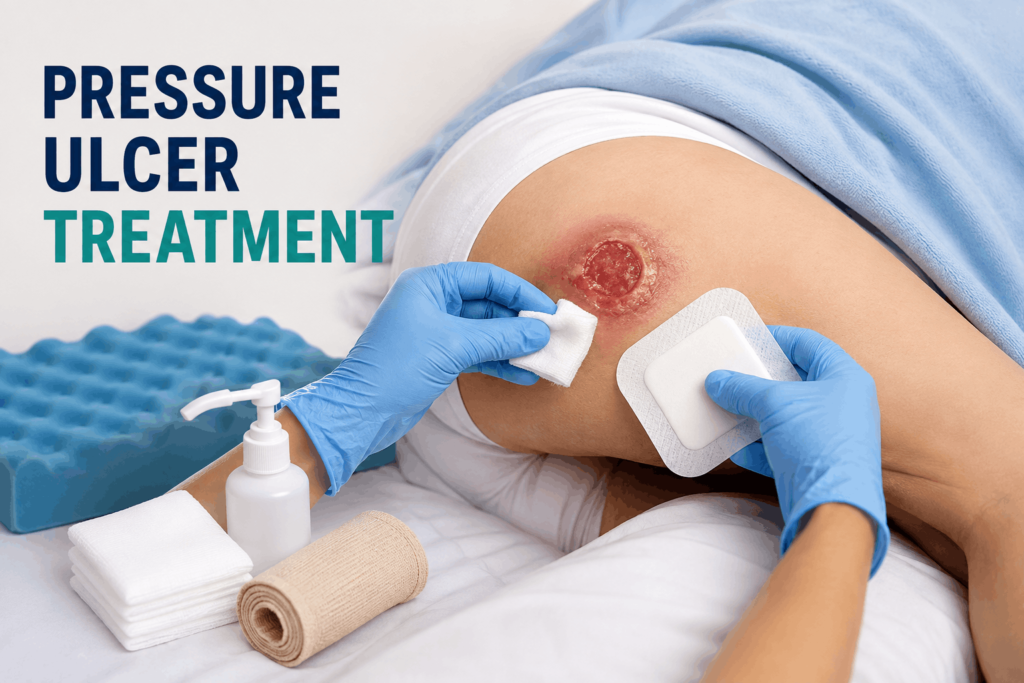
A pressure sore can start as a small patch of red skin and turn into a deep, painful wound in just a few days. Families across Minnesota, from Minneapolis and St. Paul to Rochester, Duluth, and rural communities, often wonder the same thing: is this something we can manage at home, or is it time to call a specialist?
This guide explains the warning signs, the stages of a pressure sore, and when professional pressure ulcer treatment is the safest next step. At Me Health Tech, we believe informed caregivers and patients make better, earlier decisions, and earlier decisions lead to better healing.
What Is a Pressure Sore?
A pressure sore, also called a pressure ulcer, bedsore, or pressure injury, is damage to the skin and the tissue beneath it. It happens when constant pressure or friction cuts off blood flow to an area. The most common spots are the tailbone, hips, heels, ankles, elbows, and the back of the head.
People at higher risk include those who:
- Spend long hours in a bed or wheelchair
- Have limited feeling or movement, such as after a stroke or spinal cord injury
- Live with diabetes or poor circulation
- Have poor nutrition or are dehydrated
- Experience incontinence or moist skin
- Are older adults with thin, fragile skin
Minnesota winters add another layer. Dry indoor heat, bulky layers, and less activity during long cold months can all raise skin risk, especially for seniors and people who use mobility aids.
The Four Stages of a Pressure Sore
Healthcare professionals describe pressure injuries in stages. Knowing the stage helps you decide how urgently to act.
Stage 1: The skin is intact but looks red (or darker on deeper skin tones) and does not fade when pressed. It may feel warm, firm, or tender.
Stage 2: The top layers of skin are broken, forming a shallow open sore or a blister. It looks like a scrape or a pink, moist crater.
Stage 3: The wound extends into the fat layer beneath the skin. It looks like a deeper crater and may have visible yellow tissue.
Stage 4: The wound is very deep and may expose muscle, tendon, or bone. This stage carries a high risk of serious infection.
Some wounds are also labeled “unstageable” (covered by dead tissue so the depth cannot be seen) or “deep tissue injury” (a purple or maroon area of damaged tissue under intact skin). Both need professional evaluation.
When to See a Wound Care Specialist
A Stage 1 area that fades quickly once pressure is removed can often be watched closely at home. But many situations call for professional pressure ulcer treatment. Consider booking a visit with a wound care specialist if you notice any of the following.
1. The Skin Is Broken
Any open sore, blister, or crater (Stage 2 or higher) should be evaluated. Early professional care can stop a shallow wound from becoming a deep one.
2. The Redness Does Not Go Away
If a red area stays after pressure has been relieved for 30 minutes or more, or it keeps coming back in the same place, the underlying tissue may already be damaged.
3. There Are Signs of Infection
Call your provider promptly if you see:
- Pus or cloudy drainage
- A foul smell
- Spreading redness, warmth, or swelling around the wound
- Increasing pain
- Fever or chills
If there is fever along with confusion, a fast heartbeat, or the person seems suddenly much sicker, seek emergency care right away.
4. The Wound Is Not Improving
A wound that shows no clear progress after one to two weeks of appropriate care, or one that gets bigger or deeper, needs a specialist’s eyes. Chronic wounds often have hidden causes such as poor circulation, nutrition gaps, or uncontrolled blood sugar that must be addressed together.
5. You See Black or Yellow Tissue
Dead tissue (eschar or slough) can hide the true depth of a wound and slow healing. Removing it safely is a job for a trained clinician, not something to attempt at home.
6. The Person Has Diabetes, Poor Circulation, or Reduced Sensation
People with these conditions can have serious wounds without feeling much pain. For them, even a small sore on a heel or foot deserves a prompt professional look.
7. The Wound Is Deep or Near Bone
Any Stage 3 or Stage 4 wound should be managed by a medical team. Deep wounds can lead to bone infection and bloodstream infection if left untreated.
What to Expect at a Wound Care Visit
A wound care specialist, which may be a physician, nurse practitioner, or certified wound care nurse, will typically:
- Review medical history, medications, nutrition, and mobility
- Measure and stage the wound and check for infection
- Clean the wound and remove dead tissue if needed
- Choose a dressing matched to the wound’s stage and drainage
- Recommend pressure-relieving support surfaces such as special mattresses or cushions
- Build a repositioning and skin-check routine for caregivers
- Schedule follow-up visits to track healing
Good pressure ulcer treatment is never just about the dressing. It combines pressure relief, wound cleaning, nutrition, moisture control, and treatment of underlying health conditions.
Helping a Wound Heal While You Wait for Your Appointment
While you arrange care, these steps can protect the area:
- Take pressure off the sore. Change position at least every two hours in bed, and more often in a chair.
- Keep the skin clean and dry, and use gentle, pH-balanced cleansers.
- Do not massage the red area or the skin around it.
- Use pillows or foam wedges to keep bony areas from touching each other or the surface.
- Encourage fluids and protein-rich foods unless a doctor has advised otherwise.
- Take a photo of the wound each day so your provider can see how it changes.
These steps support care but do not replace a professional assessment.
Finding Care in Minnesota
Minnesota has strong healthcare systems, and many offer hospital-based wound clinics, outpatient wound centers, and home health nursing. If you live in a smaller or rural community, ask your primary care provider about referrals, telehealth wound checks, or home health visits that bring care to you.
Coverage matters too. Medicare, Minnesota Medical Assistance, and many private plans cover medically necessary wound care, but requirements vary. Call your insurer or the clinic’s billing office before your first visit to understand what is covered and whether you need a referral.
If you suspect a loved one in a care facility is developing pressure sores because of inadequate care, speak to the facility’s nursing leadership first. Concerns about neglect can also be reported through Minnesota’s vulnerable adult reporting system.
Frequently Asked Questions
Q: How fast can a pressure sore develop?
A: Skin damage can begin in as little as a few hours of unrelieved pressure, and a wound can worsen within days. This is why regular repositioning and daily skin checks are so important.
Q: Can I treat a pressure sore at home?
A: A very early Stage 1 area may improve at home if pressure is removed right away and the skin is protected. Open wounds, wounds with infection signs, or sores that are not improving should be seen by a healthcare professional.
Q: What kind of doctor treats pressure ulcers?
A: Wound care is provided by many professionals, including primary care providers, wound care physicians, nurse practitioners, and certified wound care nurses. Your primary care provider can point you to the right local team.
Q: How long does pressure ulcer treatment take?
A: Healing time depends on the stage, the person’s overall health, and how well pressure is controlled. Stage 1 and shallow Stage 2 wounds may heal in days to weeks, while deep wounds can take months.
Q: Is a pressure sore an emergency?
A: Not always, but it becomes urgent if there is fever, spreading redness, pus, a foul odor, confusion, or sudden severe pain. In those cases, seek medical care immediately.
Q: Does cold Minnesota weather increase the risk of pressure sores?
A: It can indirectly. Dry skin, less movement, tight or layered clothing, and reduced circulation in cold conditions may all raise risk, particularly for older adults and people with limited mobility.
Q: Can pressure sores be prevented?
A: Most can be. Regular repositioning, pressure-relieving mattresses and cushions, daily skin inspections, good nutrition, hydration, and keeping skin clean and dry are the foundations of prevention.
Conclusion
Pressure sores are easier to treat the earlier they are caught. If the skin is broken, the redness will not fade, the wound shows signs of infection, or healing has stalled, it is time to see a wound care specialist. Timely pressure ulcer treatment protects comfort, independence, and long-term health, and it can prevent a small problem from becoming a hospital stay.
At Me Health Tech, our goal is to give Minnesota families clear, trustworthy health information so they can act with confidence. If you are unsure about a wound, do not wait. Contact a qualified healthcare provider in your area today.